
Best Base Layouts in Build Base to Survive VERITY
Compare three original planning diagrams for a compact solo starter, a layered fallback build, and a co-op role base, then use a six-step method to adapt one without inventing pathing or performance guarantees.
Start with the job, then test it in the current game
Start solo with the Compact Starter Base, add an inner fallback only when the first shell is complete, and use the Co-op Role Base when two to six players need distinct positions and routes. All three are original planning diagrams, not site-tested performance guarantees; adapt them to current prices, pieces, controls, and the behavior you actually observe.
Check free resources before sizing the shell
A working code may change the Cash or block resources available in this session, so check the dated status before committing to a larger layout.
Try the current CODES reward firstThree layouts for different player jobs
These diagrams translate the confirmed build, weapon, co-op, and autosave systems into testable plans. They are not screenshots, official layouts, or performance guarantees.
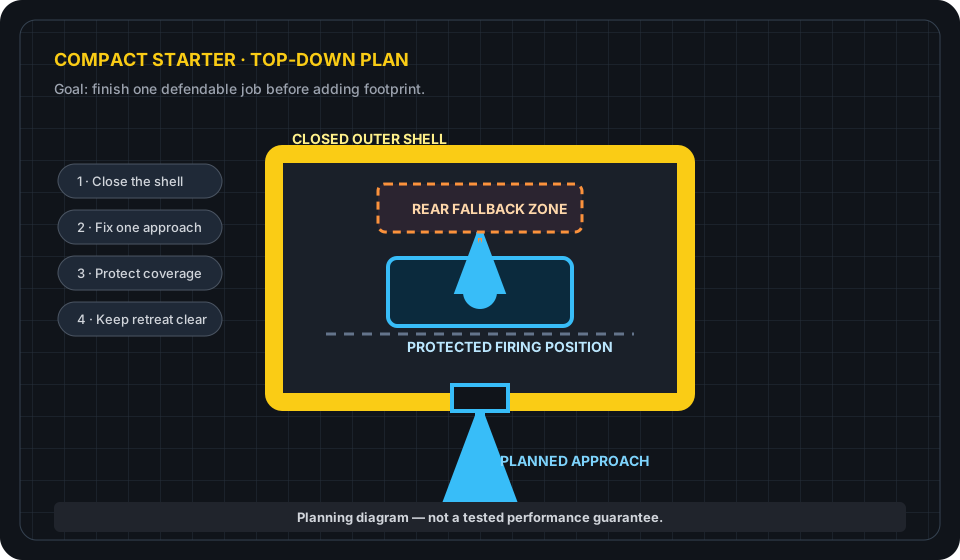
Compact Starter Base
A small first-night shell that limits the number of responsibilities a solo player must watch.
- Best for
- Solo, new account, low Cash, first night
- Budget
- Starter / lowest practical footprint
- Paid items
- None assumed
- Last site test
- Not yet tested in-game
Confirmed system basis
- Free-form building
- Turrets and guns
- VERITY at night
- Buildings autosave
Still unverified
- No pathing guarantee
- No durability claim
- No exact block or turret cost
Build order
- Mark the smallest usable footprint
- Close the outer shell
- Leave one planned approach
- Protect one firing position
- Keep the rear fallback route empty
One pressured approach can become a single point of failure, and no current-version test proves the shape controls VERITY pathing.
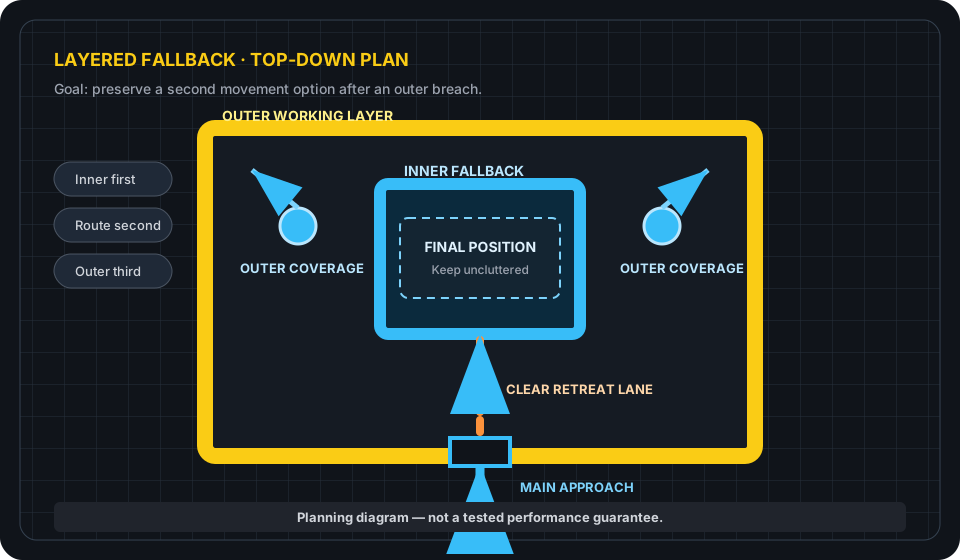
Layered Fallback Base
An outer working layer and a smaller inner position so one breach does not erase every movement option.
- Best for
- Mid progression, more building pieces, repeat nights
- Budget
- Medium / second-stage expansion
- Paid items
- None assumed
- Last site test
- Not yet tested in-game
Confirmed system basis
- Free-form building
- Turrets and guns
- VERITY at night
- Buildings autosave
Still unverified
- No claim that two layers increase survival by a fixed amount
- No exact wall HP or turret range
Build order
- Finish the compact inner fallback
- Reserve a clear retreat lane
- Add the outer shell
- Assign outer coverage
- Add only the delay pieces shown by the current game
The extra layer costs more pieces and can create clutter; if the retreat lane is blocked, the second position loses its purpose.
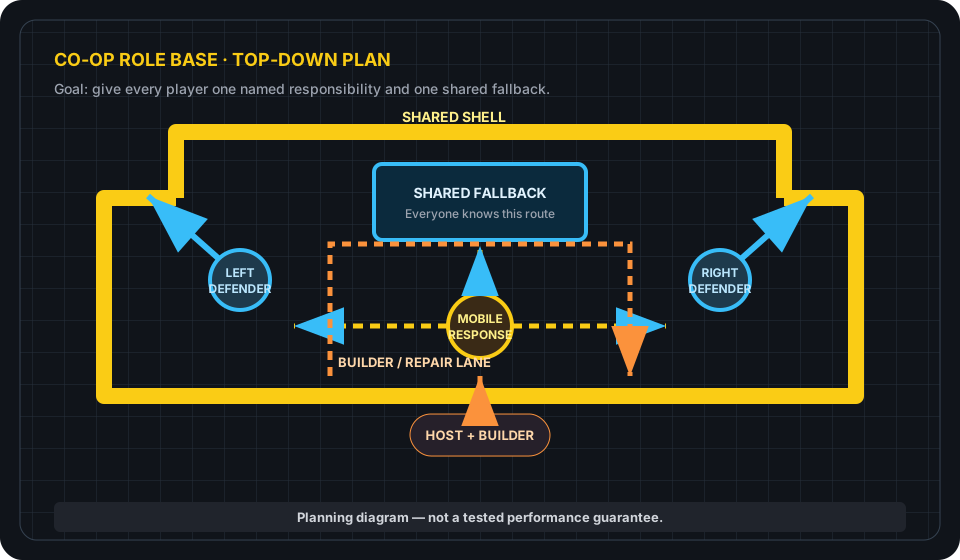
Co-op Role Base
A shared layout that makes building, fixed coverage, mobile response, repair, and fallback responsibilities visible.
- Best for
- Friends building together with distinct jobs
- Budget
- Flexible / team-controlled expansion
- Paid items
- None assumed
- Last site test
- Not yet tested in-game
Confirmed system basis
- Invite friends to build together
- Free-form building
- Turrets and guns
- VERITY at night
Still unverified
- No confirmed edit-permission model
- No shared-resource claim
- No host-leave save guarantee
Build order
- Name the host and builder
- Close the shared shell
- Assign left and right approaches
- Draw the mobile response route
- Keep the repair lane separate
- Mark the common fallback
The plan depends on communication and current edit permissions; simultaneous building can block routes or duplicate work.
A compact base-planning method
- 01
Start with the smallest useful footprint
Choose enough room for the current plan rather than maximizing empty area. Compact space is easier to finish, inspect, and cross when pressure changes. Expansion is not wrong; it should come after the existing shell, approaches, coverage, and fallback all have clear answers.
Planning noteEvery extra edge should earn its place by doing a named job. - 02
Finish the shell before adding outer space
Turn the footprint into a complete enclosing plan. Official art shows wall- and window-like pieces, but this guide does not rank their materials or durability. Use the current in-game information and focus first on whether the boundary is intentional and complete.
- 03
Make every entrance intentional
Count all openings or directions defenders must watch. Keep only as many as the current plan can identify and cover. This is a responsibility rule, not a statement about VERITY pathing; the enemy behavior needed for that claim is not documented.
- 04
Assign coverage by approach
For each approach, decide whether a turret position or player firing lane owns the first response. Turrets and guns are confirmed systems, while their models and stats remain unknown, so use visible in-game roles instead of fictional range circles or DPS values.
- 05
Keep outside delay separate from the shell
Creator media shows several perimeter-object families. Treat an outside object as a separate planning function rather than assuming it stops or damages VERITY. Exact names, effects, targets, costs, and placement limits are not established by a thumbnail.
- 06
Reserve clear internal movement
Keep one route through the interior open and decide where defenders fall back if an edge is pressured. After testing the base in the current game, use the planner to identify the weakest function and revise that part before adding another layer of complexity.
Repair the plan without guessing
The footprint is too large to close
Reduce it and remove unclear entrances before adding another feature.
You cannot choose a wall material
Follow the current item information in game. Official art alone does not support a durability ranking.
Placement controls are unclear
Use the live build interface. The hammer and blueprint visuals do not prove a fixed control scheme.
Avoid unsupported shortcuts
Copying an unbeatable-looking picture
A thumbnail shows a composition, not a validated pathing model, stat sheet, or universal blueprint.
Adding entrances without owners
Every new opening adds a responsibility. Name its coverage before keeping it.
Counting delay as guaranteed protection
Perimeter visuals do not establish effects or stopping power. Keep shell and fallback plans independent.
Questions players ask next
What makes a useful starter base plan?
A finishable shell, clear approaches, assigned coverage, an outside delay idea, an open interior route, and a defender routine.
How many entrances should I plan?
Use only as many as you can clearly identify and cover. This is a planning rule, not a pathing claim.
Should I build larger immediately?
Finish the compact plan first, then expand only when the new area and added approaches have explicit jobs.
Are brick-like walls stronger than wood-like walls?
Official art shows both visual families, but no safe durability or HP dataset supports a strength ranking.
Is this an unbeatable layout?
No. It is a planning method, not a guaranteed blueprint or pathing exploit.